
Townsville and District Beekeepers Association Inc.
Varroa Management
Detection, monitoring and responsible management for North Queensland beekeepers.
TOWNSVILLE & NORTH QUEENSLAND • DATED NOTICES
Latest Varroa Updates
Local notices are dated snapshots, not a live case count. For the newest reported detections, check the Queensland Varroa surveillance map, which is updated daily.
Latest notices first. Scroll inside the box to read older updates.
What beekeepers should do now
- Monitor monthly using an alcohol wash; record mite counts and report results, including zero findings, through Bee 123 / Queensland reporting.
- Check mite counts during and after any treatment, not just beforehand.
- Use integrated pest management and verify current treatment approvals, label and permit conditions.
- Check movement requirements and the surveillance map before relocating bees or equipment.
- Report suspect disease signs or possible treatment failure to Biosecurity Queensland: 13 25 23 or varroa@dpi.qld.gov.au.
Page update basis: November 2026 association newsletter; Queensland and national official guidance checked 5 November 2026. This page is not a substitute for current regulatory notices.
Understanding Varroa
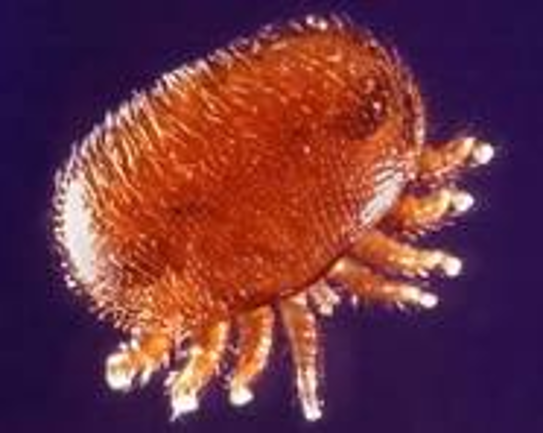
Varroa destructor is a small, reddish-brown external parasitic mite of European honey bees. It feeds on the fat body tissues of adult and developing bees and reproduces inside capped brood cells. As mite numbers increase, Varroa can weaken individual bees and the entire colony.
Why Varroa is a serious problem
Varroa can transmit damaging viruses, including Deformed Wing Virus. Heavy infestations can lead to shorter-lived bees, damaged brood, reduced colony strength and eventual colony losses. Importantly, a hive may look strong even while its mite population is rising.
Signs to watch for
- Bees with deformed wings, crawling bees or unusually weak adults.
- Patchy brood patterns, declining colony populations or poor development.
- Reddish-brown mites seen on bees, exposed brood or monitoring boards.
These signs are not specific to Varroa, and their absence does not mean a colony is free of mites.
Why monitoring matters in North Queensland
Our warm climate can allow colonies to maintain brood for much of the year. Because Varroa reproduces in capped brood, mite populations may continue increasing without a long natural brood break. Regular monitoring helps beekeepers measure mite levels, choose suitable management actions and confirm that treatment has worked.
Key message: Do not wait for visible symptoms. Monitor regularly, keep written records and use an integrated pest management approach.
Detecting and Monitoring Varroa
Use a combination of monitoring methods to detect Varroa, assess mite levels and check treatment effectiveness. Select a linked heading to watch the demonstration.
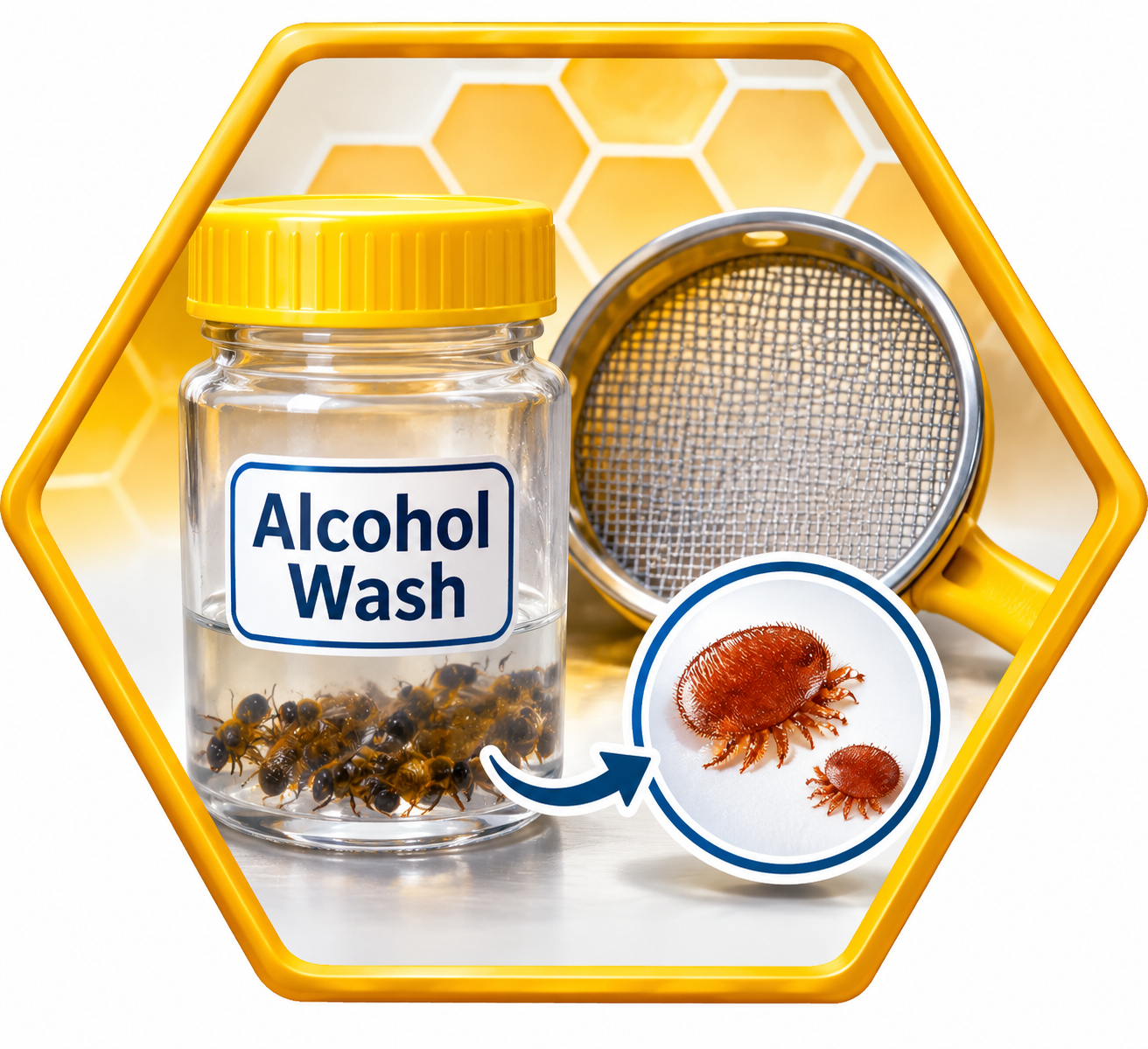
Alcohol Wash ↗
Primary quantitative sampling method for estimating mites on adult bees. NSW Biosecurity demonstration.
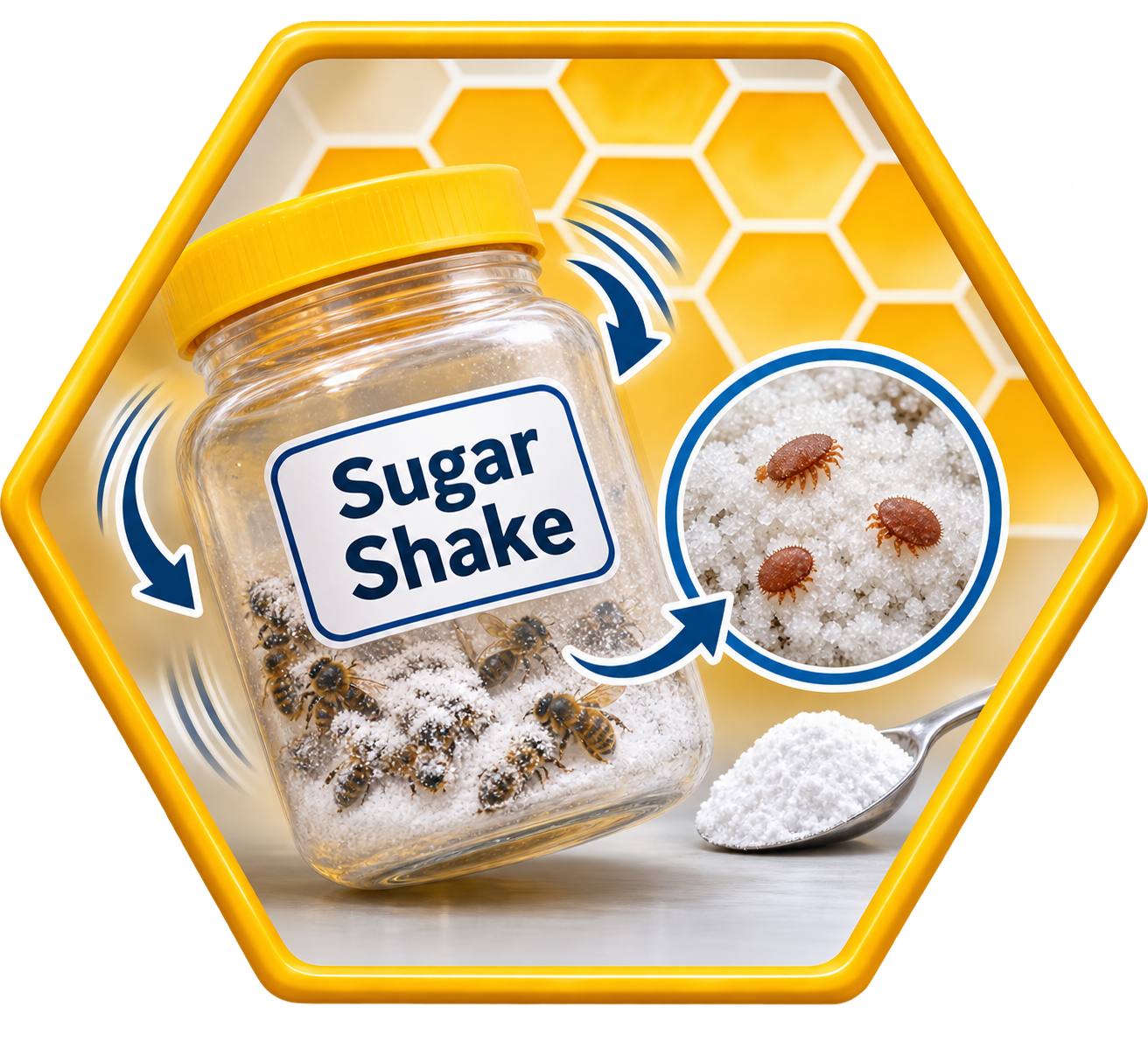
Sugar Shake ↗
Alternative sampling method using powdered sugar. Watch the sugar shake demonstration.
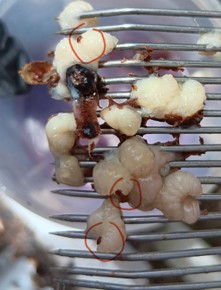
Drone Uncapping ↗
Inspect exposed drone brood for mites. Useful for detection, but not a substitute for measuring adult-bee mite load. Watch the demonstration.
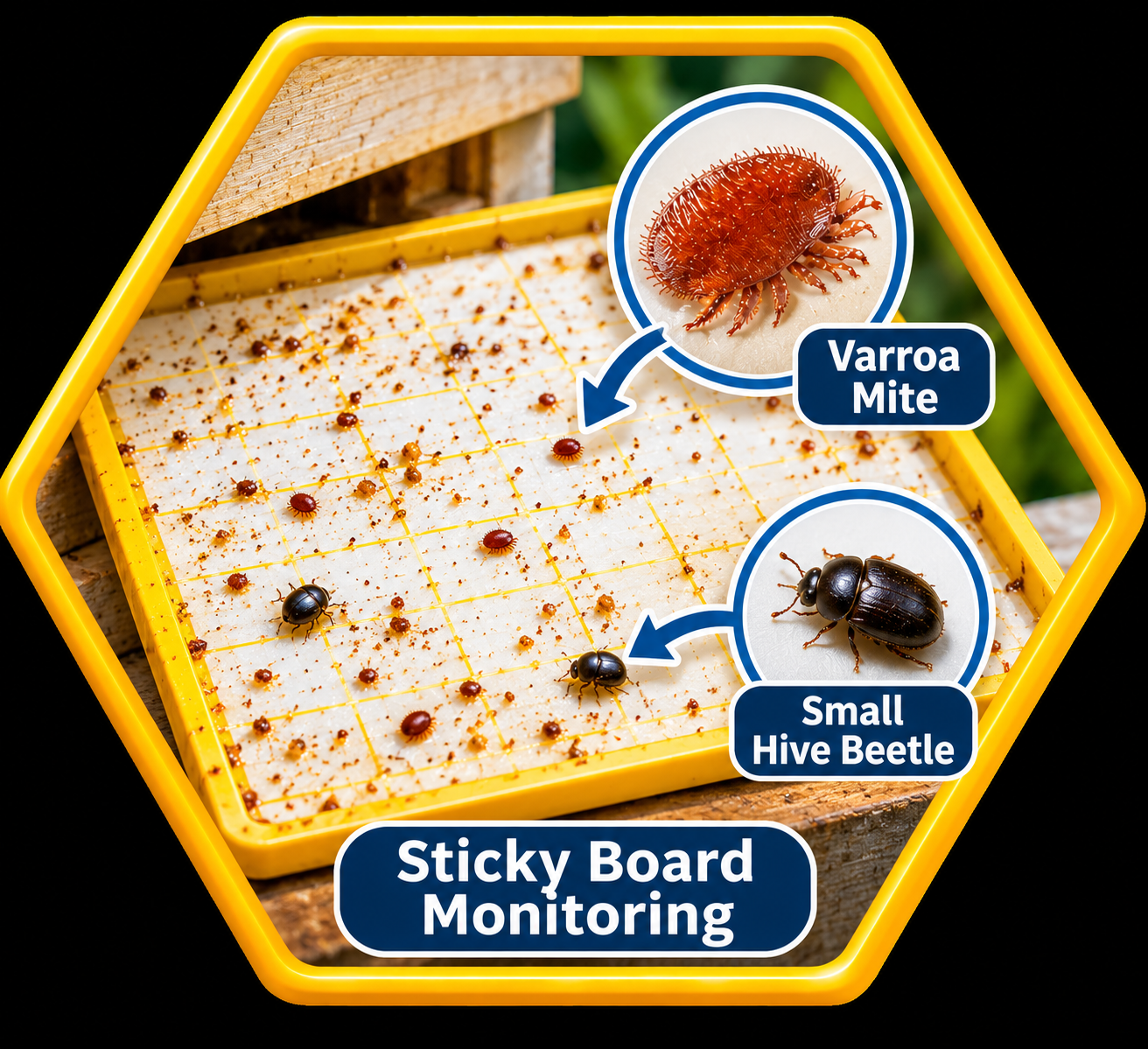
Sticky Board Monitoring
Examine fallen mites on a collection board. Natural mite drop alone does not provide an adult-bee infestation percentage.
Record: date, hive ID, method, sample size, mite count, colony condition and any follow-up action.
Interpreting Your Monitoring Results
A mite count is most useful when it includes the sampling method, number of bees sampled and the date. Keep the same method for follow-up checks so you can compare results more meaningfully.
Example: calculating an alcohol-wash result
If 9 mites are recovered from a sample of 300 adult bees, the result is 3 mites per 100 bees (3%).
Calculation: mite count ÷ number of bees sampled × 100.
Record the hive ID, sample size, mite count, colony strength, brood conditions and any recent treatment. A sticky-board mite drop or drone-uncapping result is not directly interchangeable with an adult-bee infestation percentage.
Action thresholds vary with local conditions and current Australian advice. Do not automatically apply an overseas threshold to Townsville. Use the latest Australian guidance and seek qualified local advice when deciding what action is needed.
Management and Treatment Options
Integrated Pest Management (IPM) combines regular monitoring, good colony management, suitable non-chemical measures and, when required, treatments authorised for use in Australia. The aim is to keep mite levels under control while protecting bees, honey and the effectiveness of available treatments.
Choose a treatment based on the colony
- Check current approvals: read the Australian product label or permit for the exact product, dose, duration, protective equipment, honey-super restrictions and disposal requirements.
- Consider brood: mites reproducing under capped brood may be protected from treatments that mainly act on exposed mites.
- Consider weather: some treatment methods have temperature restrictions or practical limitations in hot conditions.
- Consider timing: nectar flow, honey harvest, colony condition and any required follow-up applications all affect the plan.
Oxalic acid and brood interruption
Oxalic acid methods primarily affect exposed mites. A properly managed brood interruption may improve their effectiveness by reducing the number of mites protected in capped brood. Vaporisation presents serious inhalation and eye hazards; only use authorised methods, equipment and PPE under current Australian directions.
Varroa Controller — controlled heat treatment
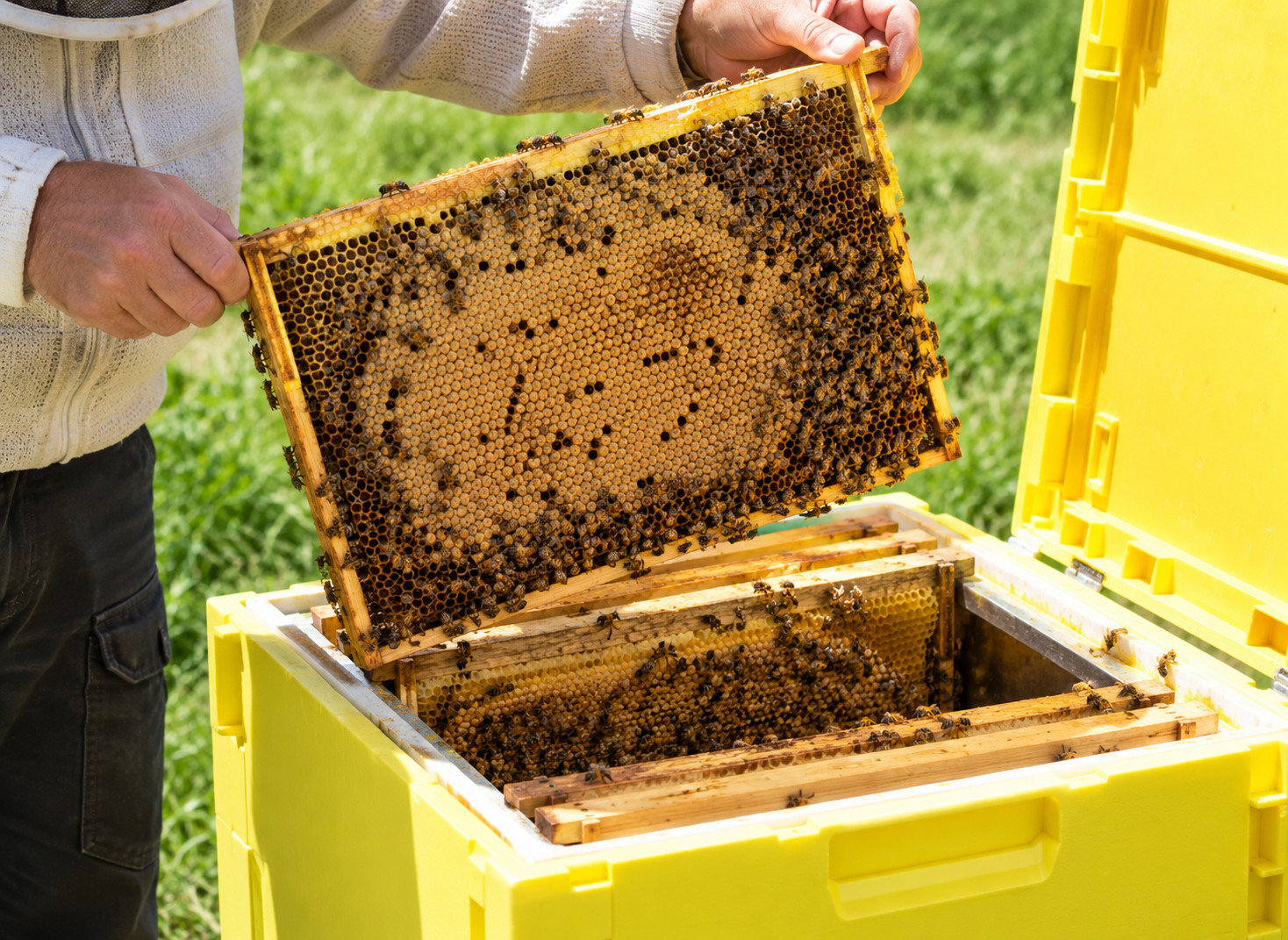
The Varroa Controller is a non-chemical hyperthermia device that treats selected capped brood frames outside the hive. Adult bees are removed from the frames before treatment, and the machine uses a controlled heating cycle intended to target Varroa mites reproducing inside the brood cells. Treated frames are returned to their colony after the cycle.
Where it fits: This is a brood-focused option within an integrated pest management plan. It does not directly treat mites on adult bees elsewhere in the hive, and untreated brood or reinfestation can allow mite levels to rise again. Monitor before and after treatment and follow the manufacturer’s instructions carefully. The equipment requires an investment and hands-on frame handling; do not improvise heating times or temperatures.
See the equipment in action: Watch an Australian Varroa Controller demonstration ▶ | More training videos and information | Australian hyperthermia case study
Managing resistance
Repeated use of the same mode of action can favour resistant mites. Rotate modes of action where appropriate and permitted, avoid under-dosing, and never combine products unless the directions expressly allow it. Always verify treatment success by monitoring again.
Important: This page does not recommend a particular chemical product or dosage. Australian approvals and permits can change. Consult Varroa Management Australia’s chemical treatment information and the current APVMA label or permit before use.
North Queensland Considerations
Townsville’s long warm season, high humidity and frequent periods of brood rearing mean local Varroa management needs careful planning. Do not assume colonies will have a reliable winter brood break. Mites may continue reproducing while capped brood is present.
Plan for local conditions
- Heat: check forecast daytime temperatures against every treatment’s current directions, particularly during hot spells.
- Brood throughout the year: understand whether capped brood will reduce the expected effectiveness of a chosen method.
- Humidity and rainfall: consider practical handling conditions, colony stress and the suitability of monitoring equipment.
- Nectar flow and honey supers: check any restrictions before treatment and plan around harvest activities.
- Strong and weak colonies: monitor individual hives rather than assuming the whole apiary has the same mite level.
Keep a simple calendar of sampling dates, treatments and follow-up checks. Monitoring after an intervention is especially important where brood rearing continues.
Check That Management Worked
Applying a treatment is not the same as confirming it worked. A colony may still carry a significant mite load even when the application was completed correctly.
Post-treatment checklist
- Record the treatment product or method, dates, colony ID and relevant conditions.
- Complete the full authorised treatment course and follow all label or permit directions.
- Recheck mite levels at the interval specified by the product directions or current monitoring guidance.
- Use a comparable sampling method and record the sample size and mite count.
- Compare results with the pre-treatment count and assess colony strength and brood health.
- If mite numbers remain concerning, seek qualified advice and consider possible resistance, reinfestation or application issues before selecting another action.
Remember: Mites on a sticky board may show that mites are falling, but they do not by themselves prove that the remaining infestation is low. Follow-up adult-bee sampling is generally more informative for estimating infestation levels.
Example: compare mite counts before and after treatment
Use the same monitoring method and a comparable sample size at the appropriate follow-up interval. The example below uses two samples of 300 adult bees.
4.0%
12 mites ÷ 300 bees × 100
1.0%
3 mites ÷ 300 bees × 100
What this means: The measured infestation fell by 75% between these samples. This does not, on its own, demonstrate treatment efficacy or confirm that the colony is below an appropriate action threshold. Use current Australian guidance, the product directions and continued monitoring to interpret the result.
Sticky boards: useful, but not the whole picture
Sticky boards can help track mite fall and identify mites, including after treatment. However, the number of mites falling does not reliably tell you how many mites remain on adult bees or inside capped brood. Where appropriate, confirm results with a consistent adult-bee sampling method.
Keep a treatment record: hive ID and location; treatment name and dates; temperature or relevant conditions; sample method and number of bees; mite count before and after; colony strength; and the next monitoring date.
Varroa Monitoring & Treatment Record Downloads
Good record keeping helps beekeepers understand changes in mite levels, assess treatment effectiveness and plan follow-up inspections. Use these two complementary resources from the Townsville & District Beekeepers Association Inc. to keep a record for each hive.
Printable Inspection Record (PDF)
A two-page landscape A4 form to take to the apiary. Record monitoring dates, methods, mite counts, colony observations, treatments and follow-up results while inspecting your hives.
Excel Hive Record Register
Transfer the results from your paper forms into a long-term digital record. The workbook provides a separate worksheet for each hive and automatically calculates suitable mite percentages and comparable treatment reductions.
How to use the records
- Print the PDF and complete it during your hive inspections.
- Record monitoring results, treatments, colony observations and follow-up checks.
- Enter the details into the corresponding hive tab in the Excel workbook.
- Keep your records and review changes over time to plan future monitoring.
The Excel workbook requires a compatible spreadsheet application. Monitoring results should be interpreted using current Australian guidance.
Biosecurity and Reporting
Good Varroa management is part of broader apiary biosecurity. Keep clear records, inspect colonies regularly, clean equipment as appropriate and minimise unnecessary movement of bees, frames and used equipment between apiaries.
Before moving bees or equipment
- Check the latest Queensland movement requirements and current surveillance information.
- Keep traceable records of hive locations, inspections and movements.
- Do not move suspect colonies or contaminated equipment without checking official requirements.
Report suspected notifiable pests or diseases, unusual colony losses or suspected treatment failure through the appropriate Queensland biosecurity channels. Contact Biosecurity Queensland on 13 25 23 or consult the Queensland Government Varroa information.
For wider bee-health responsibilities, see the association’s Bee Biosecurity page.
Four practical biosecurity habits
Check colonies regularly and investigate unusual brood or adult-bee symptoms.
Log apiary locations, hive IDs, mite counts, treatments and follow-up results.
Clean and manage shared tools and used equipment appropriately between apiaries.
Verify current Queensland requirements before moving bees, queens, brood or used equipment.
Report suspected biosecurity issues
For suspected notifiable pests or diseases, check your reporting obligations and contact Biosecurity Queensland: 13 25 23.
Consult Queensland Government Varroa information for current advice.
Official Resources and Further Reading
Use current Australian sources when checking monitoring procedures, treatment permissions and movement or reporting requirements.
- Varroa Management Australia — monitoring, integrated pest management and treatment resources.
- Queensland Government — local biosecurity information and updates.
- APVMA — current registered products, labels and permits.
- Association Bee Biosecurity guide — additional local learning resources.
Educational information only. Confirm the latest regulations, approvals and product directions before acting. Local notices elsewhere on this page are dated snapshots, not a live count of detections.